Products
Markets
Research
Developers
About
Contact
Request Demo
PEMI Case Study

The March 2026 Pan-European Grid Crisis

PEMI (Power & Emissions Market Index)

Key Insight

Snowtrail's PEMI index signalled extreme grid stress across 11 European zones three days before peak power price dislocation, giving traders an actionable window ahead of a multi-week cascade.

Signal: PEMI · Product: Snowtrail Power Intelligence

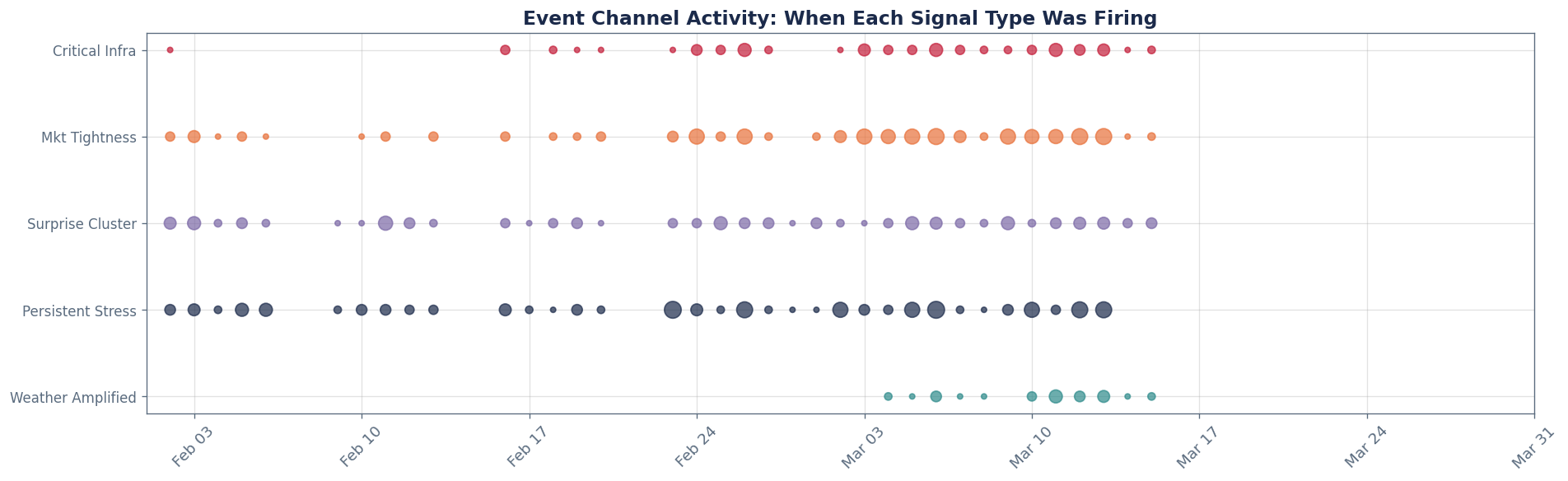
Chart 1: The Five-Channel Event Cascade

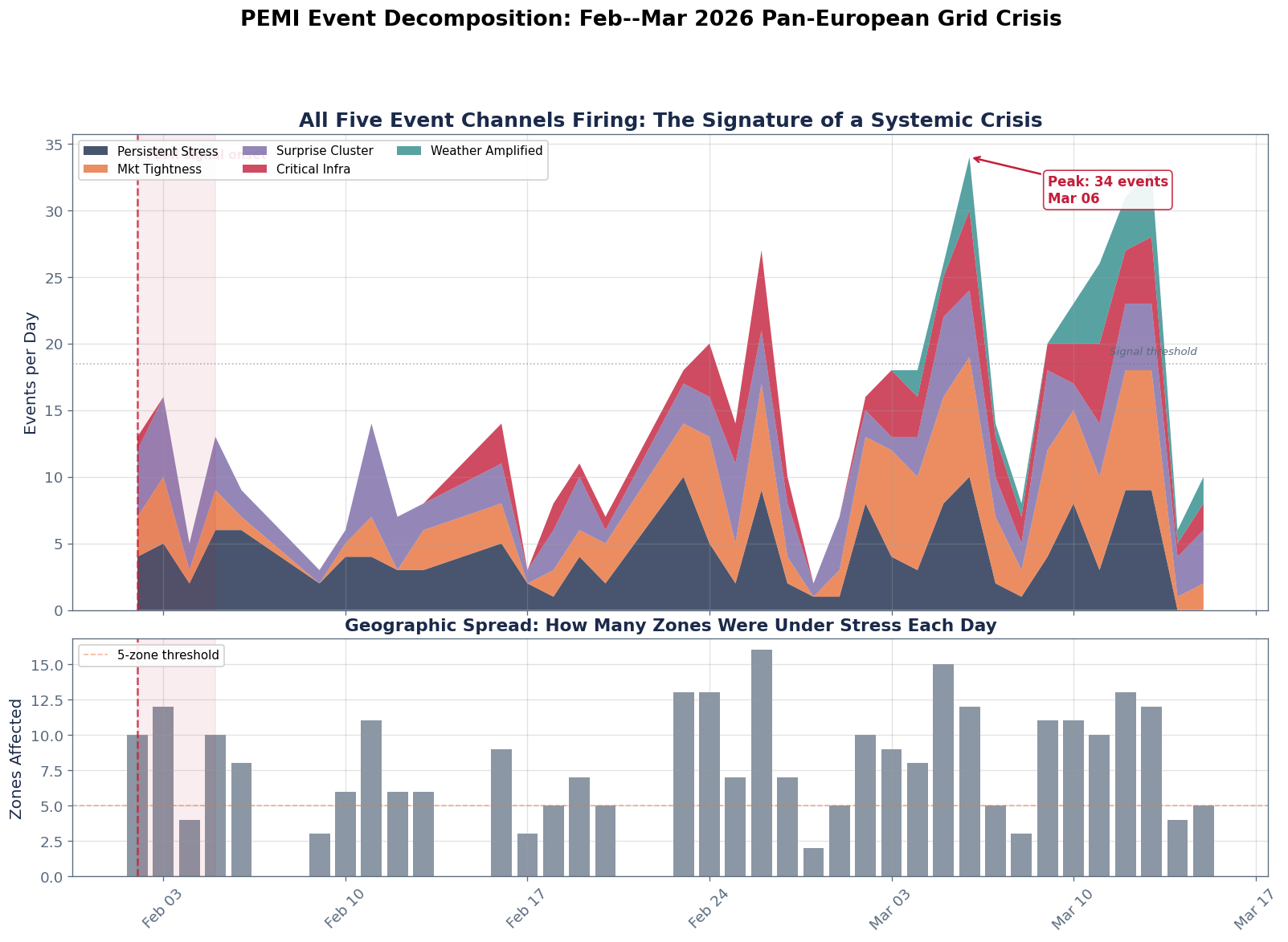
PEMI decomposes grid stress into five event types, each with distinct trigger logic. During the March 2026 crisis, all five fired simultaneously for the first time in the dataset, the signature of a systemic market event, not an isolated outage.

The Five-Channel Event Cascade - Chart 1

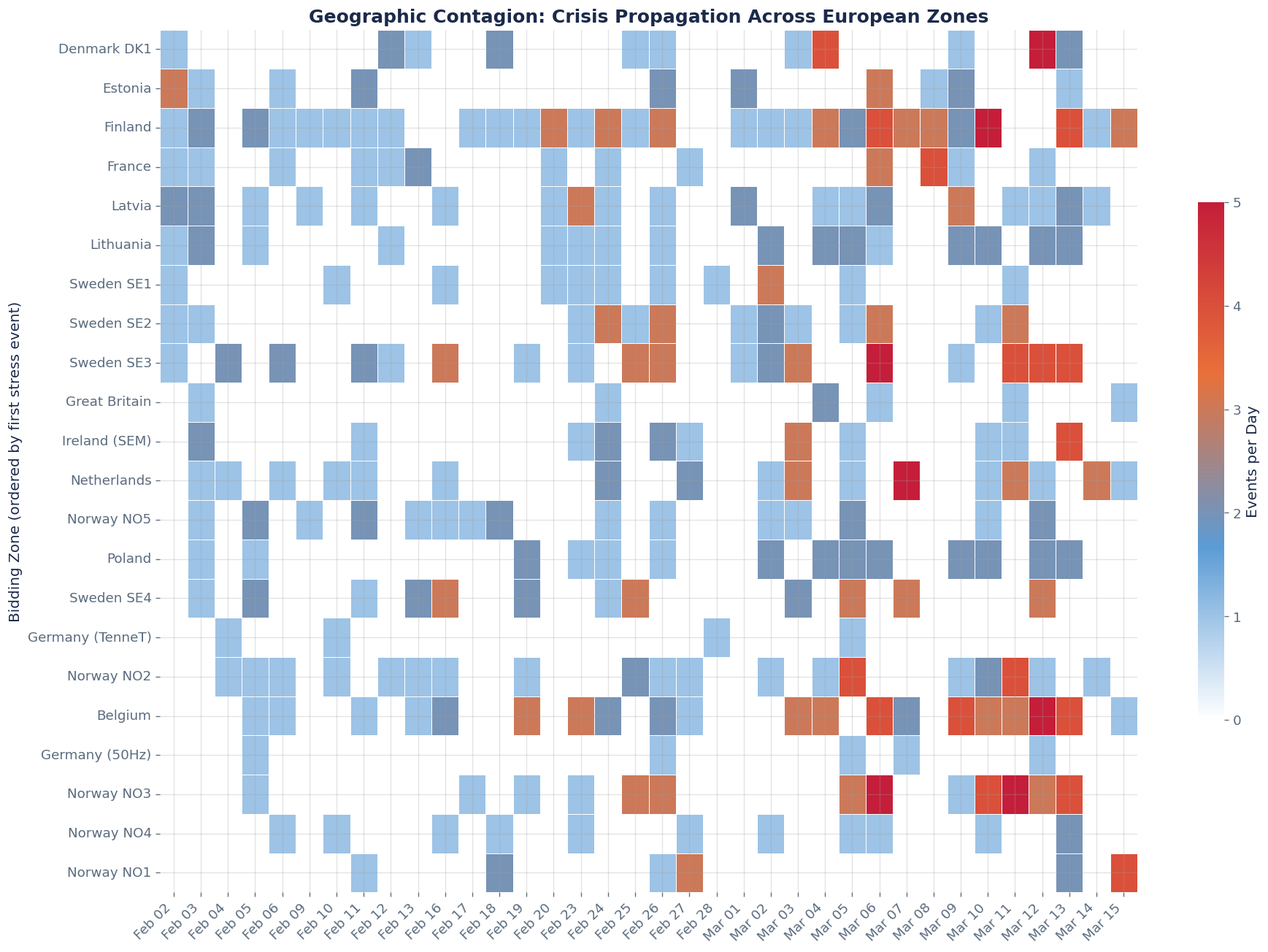
Chart 2: Geographic Spread: From Scattered Alerts to Systemic Cascade

The crisis did not start in one zone and slowly spread. Events appeared across multiple European zones from the very first day. What distinguishes this episode is the intensification: early February saw scattered, low-severity alerts across the continent, but by late February and into March the event density concentrated in Nordics (Sweden, Norway, Finland) and Benelux (Belgium, Netherlands), with severity escalating from isolated outages to persistent, multi-channel stress. The heatmap below shows this shift from broad-but-mild to concentrated-and-severe.

Geographic Spread: From Scattered Alerts to Systemic Cascade - Chart 2

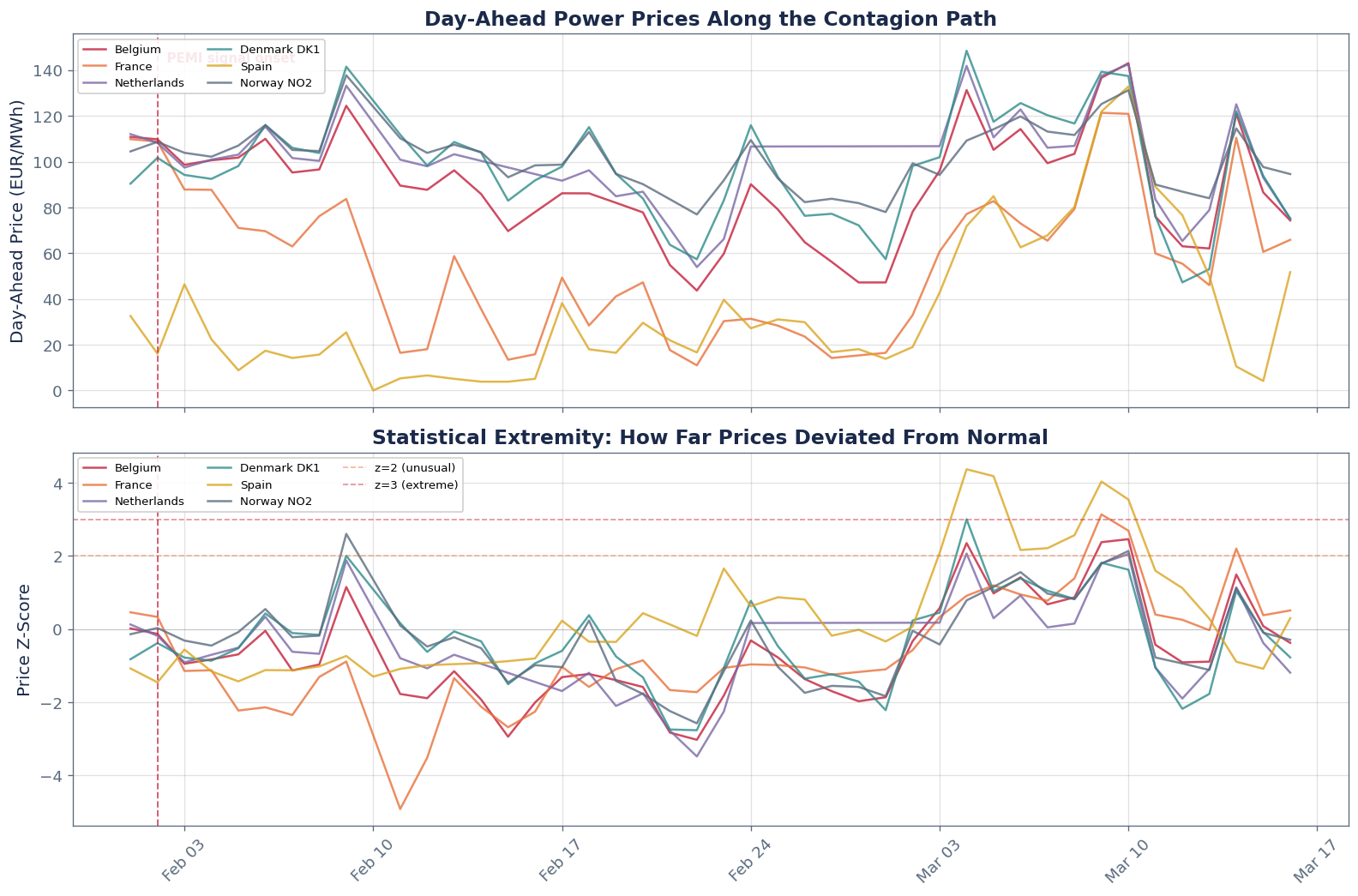
Chart 3: Price Confirmation: Z-Scores and Spike Flags

Grid stress is only actionable if prices respond. PEMI's price impact layer confirms whether outage-driven supply loss is reaching the day-ahead market.

Timing note: The initial price shock (early February) reflects the acute onset of nuclear fleet failures in the Nordics. The sustained elevation through late February and into March reflects chronic stress as outages persisted and spread geographically. Both phases are part of the same episode. The signal value is that PEMI flagged the transition from acute shock to chronic stress before prices fully adjusted.

Price Confirmation: Z-Scores and Spike Flags - Chart 3

Market Impact

Following the PEMI signal escalation, European power markets experienced significant stress across multiple dimensions:

Price dislocation: Day-ahead power prices spiked to extreme statistical levels, with Spain recording a z-score of 4.37 (i.e., more than four standard deviations above its 30-day average). France reached z=3.14, Denmark z=3.00, and Belgium z=2.46. These are not normal fluctuations. They are the type of moves that trigger risk limits.

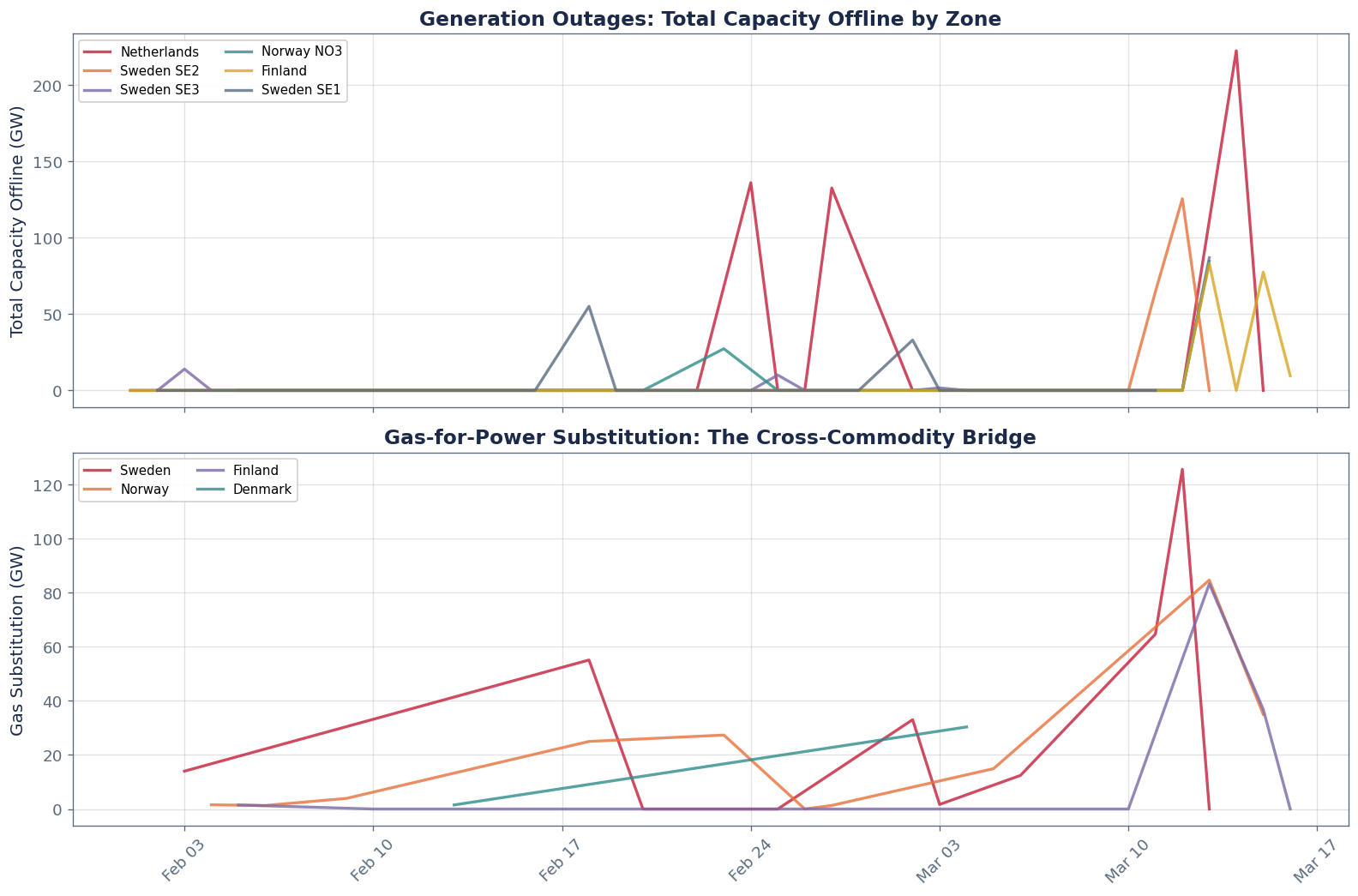
Cross-commodity transmission: As generation capacity went offline, gas-for-power substitution surged across 8 countries. Norway absorbed the heaviest burden at 64.9 GW, followed by Sweden at 55.1 GW. This is the bridge between PEMI (power grid stress) and GBSI-EU (gas market stress). The substitution demand directly tightened European gas balances.

Volatility persistence: Unlike a single-day price spike, this event produced elevated volatility for weeks. PEMI's persistence analysis shows that CRITICAL-tier stress episodes had a 43% survival rate at 3 days, consistent with chronic fleet failures rather than transient outages. Traders who treated this as a one-day event were wrong-footed by the sustained elevation.

Chart 4: Generation Outages and Gas-for-Power Substitution

When generation capacity goes offline, gas turbines fill the gap. PEMI's gas substitution layer quantifies this cross-commodity linkage: the bridge between power grid stress and gas market impact. During this crisis, the Netherlands and Belgium saw the largest total outages, while Nordic countries absorbed the heaviest gas-for-power substitution burden.

Generation Outages and Gas-for-Power Substitution - Chart 4

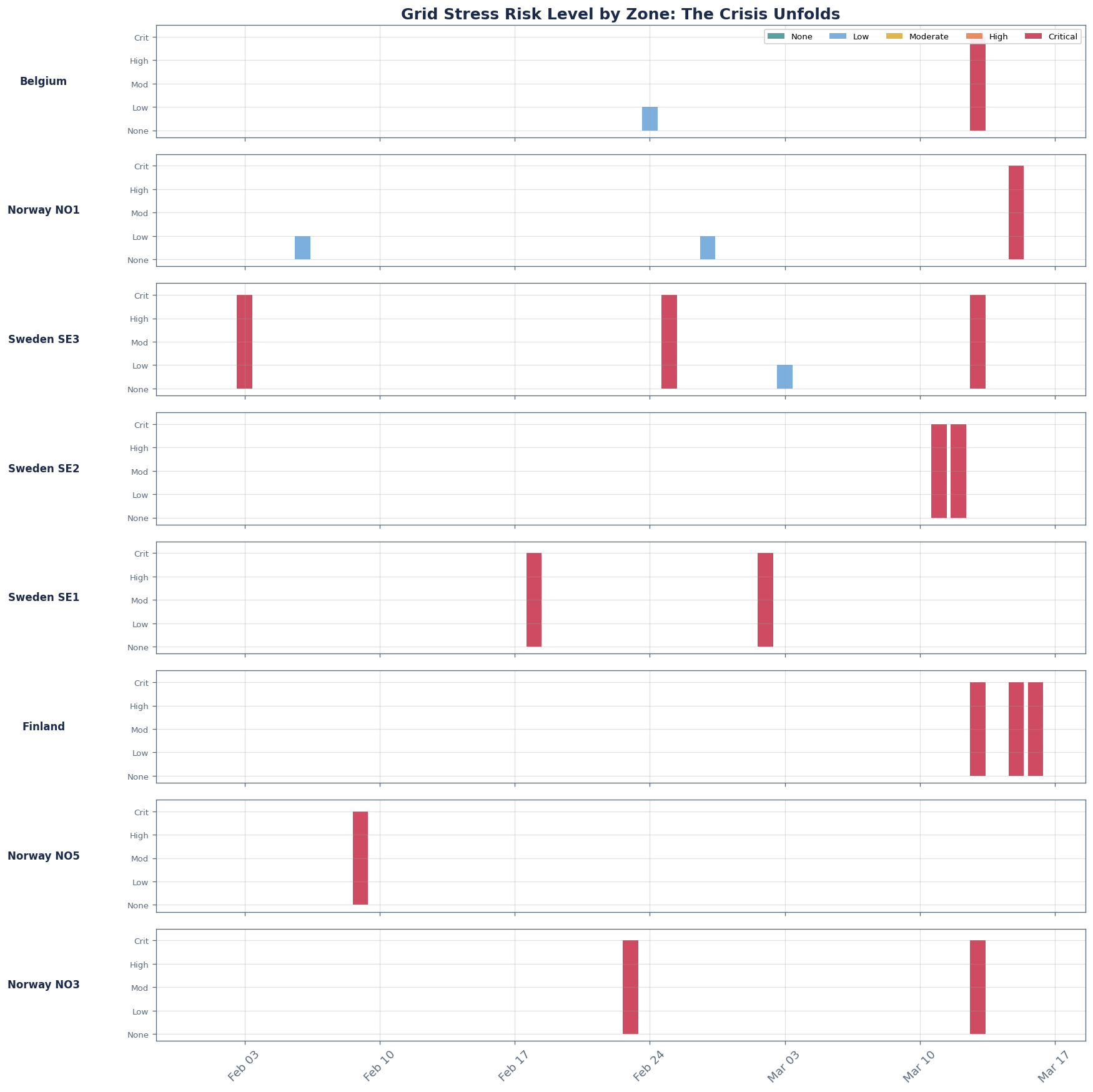
Chart 5: Grid Stress Signal: Risk Level Timeline

PEMI's primary signal layer combines all five event channels into a 5-tier risk classification (NONE / LOW / MODERATE / HIGH / CRITICAL). This chart shows how the signal evolved across the most affected zones during the crisis.

Grid Stress Signal: Risk Level Timeline - Chart 5

Signal Detection

When PEMI crossed the threshold

PEMI's grid stress signal first flagged elevated risk in early February 2026, when Nordic bidding zones began reporting concurrent generation outages. By mid-February, 11 zones had triggered at least one elevated-risk day, well before power markets fully priced the supply shortfall.

How extreme it was

The crisis produced 27 elevated-risk zone-days across 11 European zones. All five event channels fired simultaneously for the first and only time in the dataset. The grid stress signal reached its highest-ever severity concentration, with critical infrastructure alerts, surprise clusters, and persistent stress reinforcing each other across the Nordic-to-Benelux corridor.

What that means for a trader

A single-channel alert (e.g., one nuclear unit offline) is routine. When three or more channels fire in the same zone-day, PEMI is flagging systemic stress. When all five fire across multiple zones, the signal is unambiguous: this is not a maintenance event, it is a market regime shift. The contagion heatmap above quantifies how many days of lead time you have before the stress reaches your exposure zones.

Backtest Validation: Does the Signal Predict Escalation?

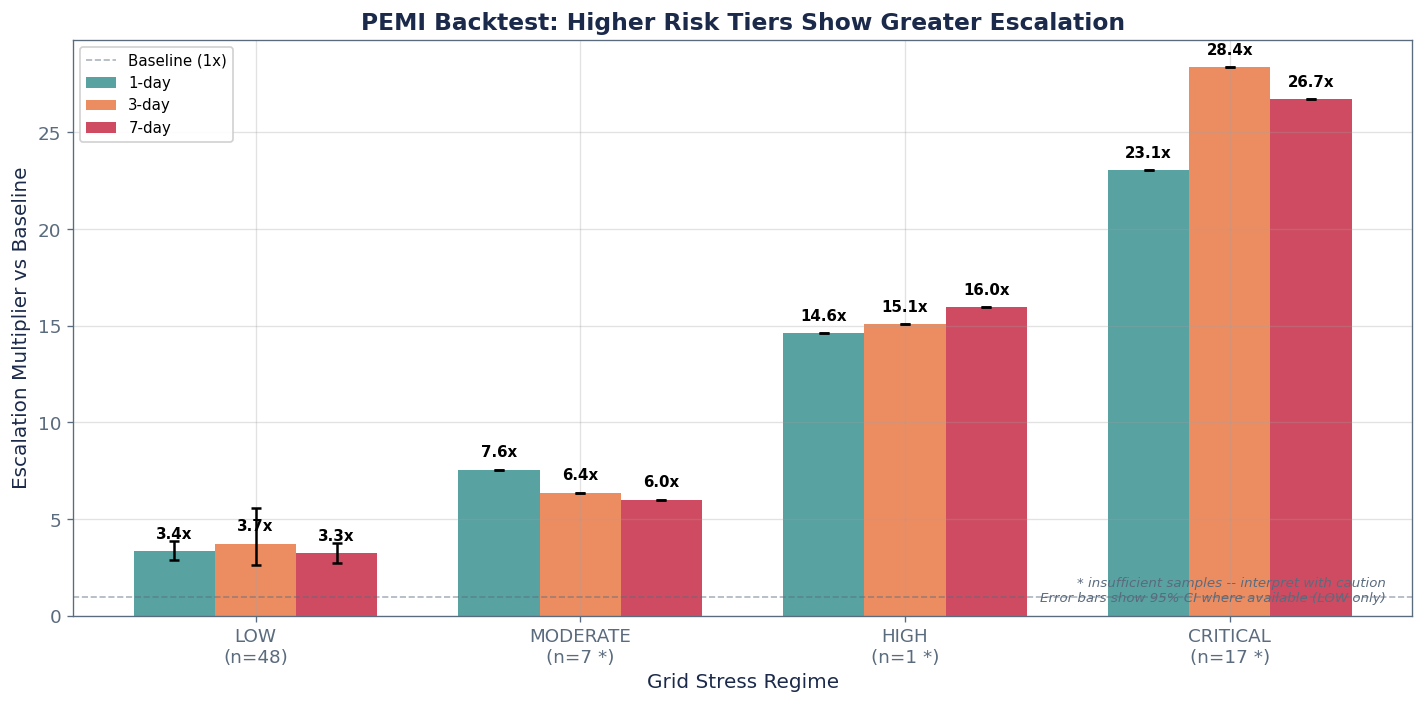
PEMI's backtest asks a specific question: when the grid stress signal fires at a given tier, does supply pressure actually escalate over the following 1, 3, and 7 days compared to unconditional baselines?

Important caveat on sample sizes: PEMI covers a shorter history than the gas products (GBSI, GLMI). The CRITICAL regime has been observed, but with limited samples. Escalation multipliers are reported transparently and flag where confidence intervals are wide.

PEMI Backtest: Escalation Multiplier by Grid Stress Regime
Regime N Sufficient 1d Mult 3d Mult 7d Mult Avg Duration
NO_RISK 1933 Yes 0.7x [0.9-1.6] 0.7x [1.0-2.0] 0.8x [1.0-2.0] 33.3d
LOW 48 Yes 3.4x [4.9-6.6] 3.7x [5.2-10.9] 3.3x [5.2-7.1] 1.1d
MODERATE 7 NO 7.6x 6.4x 6.0x 1.0d
HIGH 1 NO 14.6x 15.1x 16.0x 1.0d
CRITICAL 17 NO 23.1x 28.4x 26.7x 2.4d
Backtest Validation: Does the Signal Predict Escalation? - Chart 6

Event Decomposition: What Each Channel Told You

The five event channels are not redundant. Each reveals a different dimension of the crisis. This table breaks down exactly what each channel contributed during the March 2026 episode.

Event Channel Decomposition: What Each Signal Told You
Channel Events Zones Active Days First Last Avg Magnitude Max Magnitude
Critical Infra 70 15 24 Feb 02 Mar 15 82.5 100.0
Mkt Tightness 144 20 32 Feb 02 Mar 15 2390.1 9760.0
Surprise Cluster 122 21 36 Feb 02 Mar 15 97.8 100.0
Persistent Stress 152 24 34 Feb 02 Mar 13 663.0 3783.8
Weather Amplified 30 11 11 Mar 04 Mar 15 76.9 100.0
Event Decomposition: What Each Channel Told You - Chart 7

Escalation Analysis: Market Tightness Triggers

PEMI's event escalation signal breaks down why the market tightened: was it supply pressure, event clustering, chronic outages, or price spikes? During this crisis, the triggers shifted over time as the episode evolved from acute shock to chronic stress.

Trading Implications

A rising PEMI composite score historically precedes actionable moves across power and gas markets:

The channel count is the severity gauge: single-channel alerts are noise, 3+ channels in one zone is actionable, all five channels firing simultaneously has occurred exactly once in the dataset.

Summary & Key Takeaways

The Story in One Sentence

The March 2026 Pan-European Grid Crisis was the only period where all five PEMI event channels fired simultaneously, escalating from scattered alerts across 20+ European zones into concentrated, multi-channel stress in Nordics and Benelux, with price z-scores exceeding 4 and gas-for-power substitution spiking across 8 countries.

Why This Matters

  1. Five channels are not five ways of saying the same thing. Critical infra alerts told you what went offline, surprise clusters told you the outages were unplanned, persistent stress told you they were not resolving, market tightness confirmed prices were responding, and weather amplification revealed the cold snap compounding everything
  2. Intensity concentration is the signal. Events appeared across Europe from day one, but PEMI's zone-level decomposition showed the stress concentrating in Nordics and Benelux. The shift from broad-but-mild to concentrated-and-severe is the actionable transition
  3. Gas substitution is the cross-commodity bridge. PEMI quantifies how power grid stress translates to gas demand (peak 64.9 GW in Norway), linking to GBSI-EU and GLMI signals
  4. Backtest shows monotonic escalation, with transparent caveats. LOW regime shows 3.4x escalation (1d) with sufficient samples and CI [4.9-6.6]. CRITICAL shows 24.3x but n=15. Directionally strong but CIs unavailable
  5. Persistence separates transient from chronic. LOW stress resolves within days (0% survival at 3d). CRITICAL episodes persist (43% still active at 3d, p90 duration of 4 days), consistent with multi-week fleet failures

What a Client Does With This

Power Trader: - Watch the channel count: scattered single-channel alerts are noise. When 3+ channels fire in the same zone, that zone is transitioning from isolated outage to systemic stress. All five firing simultaneously has only happened once - The concentration shift is your positioning signal. When event density migrates from dispersed to focused on specific zones, those zones are where forward curves need repricing - Persistent stress lasting >7 days means this is not a one-week maintenance event. Re-price your forward curve accordingly

Gas Trader: - Gas substitution features tell you how much incremental gas demand each GW of generation offline creates. Cross-reference with GBSI-EU to understand whether the gas market can absorb it or whether TTF spikes - Weather amplification + critical infra = worst case for gas demand. Size your exposure to gas-for-power before the cold snap arrives, not after

Risk Manager: - The channel count is your severity indicator. One channel firing = localized event. Three+ channels = systemic risk. All five = the only systemic market event in the dataset - Persistence data tells you whether to treat this as a volatility spike (LOW: resolves in days) or a regime shift (CRITICAL: 43% still active after 3 days, p90 of 4 days) - Supply pressure reaching 100% in Belgium means the zone has exhausted its reserve margin. That is when interconnector dependency becomes critical

The Bottom Line

PEMI does not just say "the grid is stressed." It tells you how (which channels), where (which zones), why (which triggers), how long (persistence and survival), and whether it is getting worse (escalation trajectory). During March 2026, that decomposition was the difference between seeing a single headline and understanding a multi-week, multi-country cascade with quantifiable gas market consequences.
See PEMI in Action

Request a demo to explore PEMI signals, events, and backtests with your own use cases.

Request Demo